Feeling stuck in a teaching rut? It’s easy to focus solely on student outcomes, but neglecting your own professional growth can hinder your effectiveness. Exploring examples of personal goals for teachers can be the key to reigniting your passion and becoming an even better educator. It’s about finding that sweet spot where your development directly benefits your students.
At a glance:
- Discover how SMART goals can transform your professional journey.
- Explore diverse examples of personal goals, from well-being to leadership.
- Learn to track your progress and adjust your goals for maximum impact.
- Understand how personal growth benefits your students and the school community.
- Get actionable steps to define, implement, and achieve your personal goals.
Why Personal Goals Matter: More Than Just a To-Do List
Teachers dedicate their lives to helping others grow, but often at the expense of their own development. Setting personal goals isn't selfish; it’s strategic. When you invest in yourself, you directly improve your teaching skills, classroom environment, and overall well-being. A refreshed and engaged teacher is more effective, more inspiring, and ultimately, better equipped to support student success.
Think of it like this: you can't pour from an empty cup. Personal development is the refueling station for your teaching career.
SMART Goals: Your Roadmap to Success
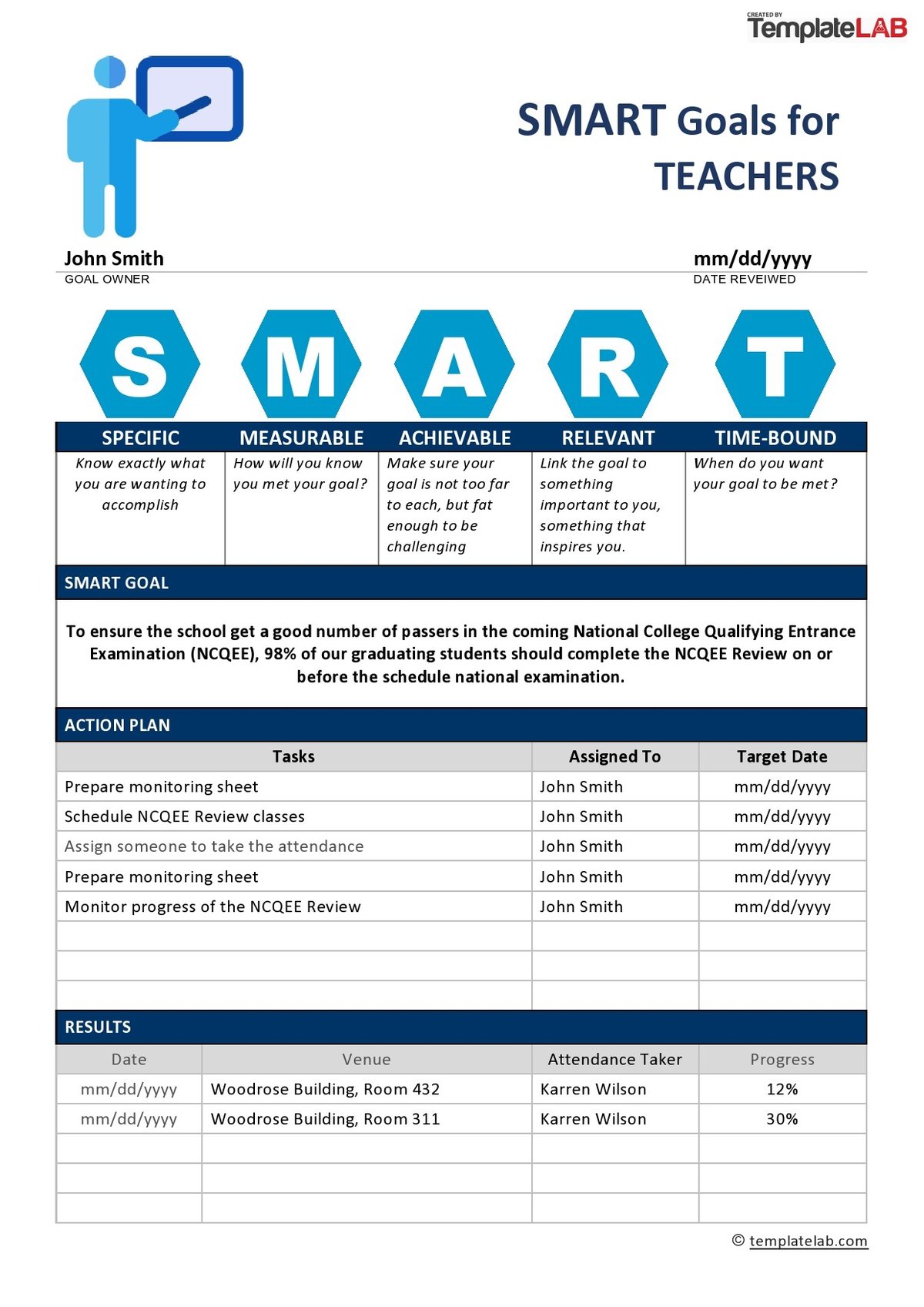
The SMART framework offers a structured approach to goal setting. It ensures your aspirations are clear, achievable, and relevant. Here’s a quick refresher:
- Specific: Instead of "improve classroom management," try "reduce classroom disruptions by 20% over six months."
- Measurable: How will you track progress? "Increase parent-teacher meetings" becomes "increase parent-teacher meetings for underperforming students by 25% within a semester."
- Achievable: Be realistic. Aim high, but don't set yourself up for failure. Break down larger goals into smaller, manageable steps.
- Relevant: Align your goals with your teaching context and your school's objectives.
- Time-bound: Set deadlines. "Attend one professional development workshop per month" is more effective than simply "attend professional development."
Locke & Latham's research emphasizes that specific, challenging goals lead to higher performance. Use the SMART framework to turn your aspirations into actionable plans.
Diverse Examples of Personal Goals for Teachers
Here are examples of personal goals for teachers, categorized for clarity:
1. Enhancing Teaching Skills:
- Goal: Implement a new teaching method (e.g., flipped classroom) and evaluate its impact on student engagement and test scores by semester end.
- Action: Research flipped classroom techniques, create video lectures, and track student performance data.
- Goal: Incorporate technology into teaching at least once a week to enhance student learning and digital literacy.
- Action: Explore educational apps and websites, integrate interactive whiteboards, and teach students digital citizenship skills.
2. Improving Classroom Management:
- Goal: Reduce classroom disruptions by 20% over six months through proactive strategies.
- Action: Implement a positive reinforcement system, establish clear classroom rules, and address disruptive behavior promptly.
- Goal: Improve punctuality and start all classes on time, at least 4 out of 5 days a week, for 6 months.
- Action: Prepare materials in advance, create a consistent routine, and communicate expectations clearly to students.
3. Fostering Student Engagement:
- Goal: Increase class participation by 20% by semester-end using engaging activities and questioning techniques.
- Action: Incorporate group discussions, hands-on activities, and think-pair-share strategies.
- Goal: Have students lead class discussions twice a week to promote critical thinking and communication skills.
- Action: Train students on effective discussion techniques, provide clear guidelines, and offer constructive feedback.
4. Cultivating Personal Well-being:
- Goal: Dedicate 30 minutes each day to mindfulness or physical activity to reduce stress and improve overall well-being.
- Action: Schedule time for exercise, meditation, or yoga. Use mindfulness apps or join a fitness class.
- Goal: Maintain a healthy work-life balance by leaving school by 5 PM on weekdays and avoiding work-related tasks on weekends.
- Action: Set boundaries, prioritize tasks, and delegate responsibilities when possible.
5. Strengthening Communication and Collaboration:
- Goal: Increase parent-teacher communication by sending bi-weekly updates on student progress and classroom activities.
- Action: Use email, newsletters, or online platforms to share information. Solicit feedback from parents and address concerns promptly.
- Goal: Collaborate with a colleague on a joint project or lesson plan each month to share expertise and enhance teaching effectiveness.
- Action: Identify colleagues with complementary skills, schedule regular meetings, and co-create engaging learning experiences.
6. Expanding Curriculum Knowledge:
- Goal: Attend one professional development workshop per month to stay current with best practices and enhance content knowledge.
- Action: Identify relevant workshops, register in advance, and implement new strategies in the classroom.
- Goal: Read two professional development books each year to expand teaching expertise and explore new pedagogical approaches.
- Action: Choose books aligned with professional goals, set reading deadlines, and reflect on key takeaways.
7. Developing Leadership Skills:
- Goal: Take on a leadership role in a school committee or initiative to contribute to school-wide improvement.
- Action: Volunteer for committees, attend meetings, and actively participate in decision-making processes.
- Goal: Mentor a new teacher to provide support, share best practices, and foster a collaborative school culture.
- Action: Offer guidance, observe classroom instruction, and provide constructive feedback.
The common thread? These are all personal goals. You choose them, you own them, and you benefit from achieving them, which in turn benefits your students. For a broader look at linking instructional goals to student success, grow student skills (guide).
Tracking Progress: Benchmarks and Data-Driven Decisions
Setting goals is only half the battle. Tracking your progress is crucial for staying motivated and making adjustments as needed.
- Establish benchmarks: Break down your goals into smaller, measurable milestones.
- Collect data: Use quantitative (e.g., test scores, attendance rates) and qualitative data (e.g., student feedback, classroom observations) to track progress.
- Reflect regularly: Schedule time for self-assessment. What's working? What's not?
- Adjust as needed: Don't be afraid to modify your goals or strategies based on your progress and changing circumstances.
Example: If your goal is to increase class participation, track the frequency of student contributions in each lesson. Use a simple tally or spreadsheet. Analyze the data to identify patterns and adjust your teaching strategies accordingly. Are certain activities more engaging than others? Are some students hesitant to participate?
Practical Playbook: How to Define, Implement, and Achieve Your Goals
Ready to get started? Here's a step-by-step guide:
- Identify areas for growth: Reflect on your strengths and weaknesses as a teacher. What skills do you want to develop? What challenges do you want to overcome?
- Brainstorm potential goals: Generate a list of potential goals that align with your professional aspirations and your school's objectives.
- Prioritize your goals: Choose 1-3 goals to focus on initially. Don't try to tackle too much at once.
- Apply the SMART framework: Refine your goals using the SMART criteria. Make them specific, measurable, achievable, relevant, and time-bound.
- Develop an action plan: Outline the steps you'll take to achieve each goal. Identify resources, strategies, and support systems.
- Track your progress: Establish benchmarks and collect data to monitor your progress.
- Reflect and adjust: Regularly assess your progress and make adjustments as needed. Celebrate your successes and learn from your setbacks.
- Seek support: Share your goals with colleagues, mentors, or supervisors. Ask for feedback and support.
Quick Answers: Common Questions and Misconceptions
- Q: What if I don't achieve my goal by the deadline?
- A: Don't get discouraged. Analyze what went wrong and adjust your approach. Extend the deadline if necessary. The goal is progress, not perfection.
- Q: How do I balance personal goals with my existing workload?
- A: Prioritize your tasks, delegate responsibilities, and set realistic expectations. Schedule time for goal-related activities, just like you would for any other important task.
- Q: Is it okay to change my goals mid-year?
- A: Yes, absolutely. Circumstances change, and your goals may need to evolve accordingly. Be flexible and adapt as needed.
- Q: What if I'm not sure where to start?
- A: Talk to a mentor, colleague, or supervisor. Seek guidance and brainstorm ideas together. Start small and build momentum.
Actionable Close
Your journey toward continuous improvement starts now. Don't wait for the perfect moment or the ideal circumstances. Choose one small, achievable goal and take the first step today. You’ll be surprised at the positive ripple effect it creates, both for you and your students.