Do your students sometimes seem directionless, unsure of what they're really supposed to be getting out of a lesson, a course, or even an entire program? Clear 'goals in learning' are the answer. When learning goals are clearly defined and communicated, students understand what's expected of them, and instructors can design effective learning experiences.
At a glance:
- Understand the crucial role of clearly defined learning goals in student success.
- Learn how to translate broad concepts into achievable learning objectives.
- Discover practical frameworks like SMART goals and Bloom's Taxonomy.
- Explore subject-specific examples to inspire your own goal-setting.
- Address common questions and misconceptions about learning goals.
Why Explicit Goals in Learning Matter
Learning goals are the bedrock of effective education. They provide a roadmap for both students and instructors, ensuring everyone is aligned on the desired outcomes. Without clear goals, learning can become aimless, leading to frustration and a lack of meaningful progress. Think of it like setting off on a road trip without a destination – you might see some interesting things along the way, but you're unlikely to end up where you need to be.
Explicitly stated learning goals ensure students comprehend, perform, or experience specific outcomes by the end of a learning journey. This clarity allows students to take ownership of their learning, track their progress, and identify areas where they need additional support. For instructors, well-defined goals provide a framework for designing课程内容, selecting appropriate teaching methods, and assessing student learning.
From Concepts to Concrete Objectives: A Step-by-Step Approach
Creating effective learning goals isn't about stating lofty ambitions; it's about translating broad concepts into actionable objectives. Here's a structured approach to help you:
- Identify Key Concepts: Start by pinpointing the fundamental ideas students should grasp. What's the "big picture"? What must they really understand? For example, in a history class, a key concept might be "the causes of the American Revolution." A "firm understanding" means the student can articulate and compare various factors contributing to the revolution.
- Formulate Essential Questions: What questions should students be able to answer after completing the learning experience? These questions should reflect a deep understanding of the core concepts. For the American Revolution example, questions could include: "To what extent were economic factors the primary cause of the American Revolution?" or "How did Enlightenment ideals influence the American Revolution?".
- Define Desired Skills: Identify the key skills students should develop, such as critical thinking, problem-solving, or communication. Plan activities and assessments that specifically target these skills. If critical thinking is a goal, the learning activities might include analyzing primary source documents or participating in debates.
- Incorporate Affective Goals: Consider goals related to fostering interest, passion, or a sense of value in the subject matter. How can you spark curiosity and inspire students to engage more deeply with the material? Perhaps assigning student led research topics, or designing a project where the student finds real world applications for the concept.
- Use Action Verbs: Use action verbs to describe what students will be able to do as a result of their learning. Avoid vague terms like "understand" or "know." Instead, use verbs like "analyze," "apply," "evaluate," or "create." For instance, instead of "Students will understand the principles of marketing," write "Students will develop a marketing plan for a new product."
Goal-Setting Frameworks: SMART, Bloom's, and Fink’s
Several frameworks can help you craft effective learning goals. Here's a look at three popular options, and how they can be applied within your approach to 'goals in learning':
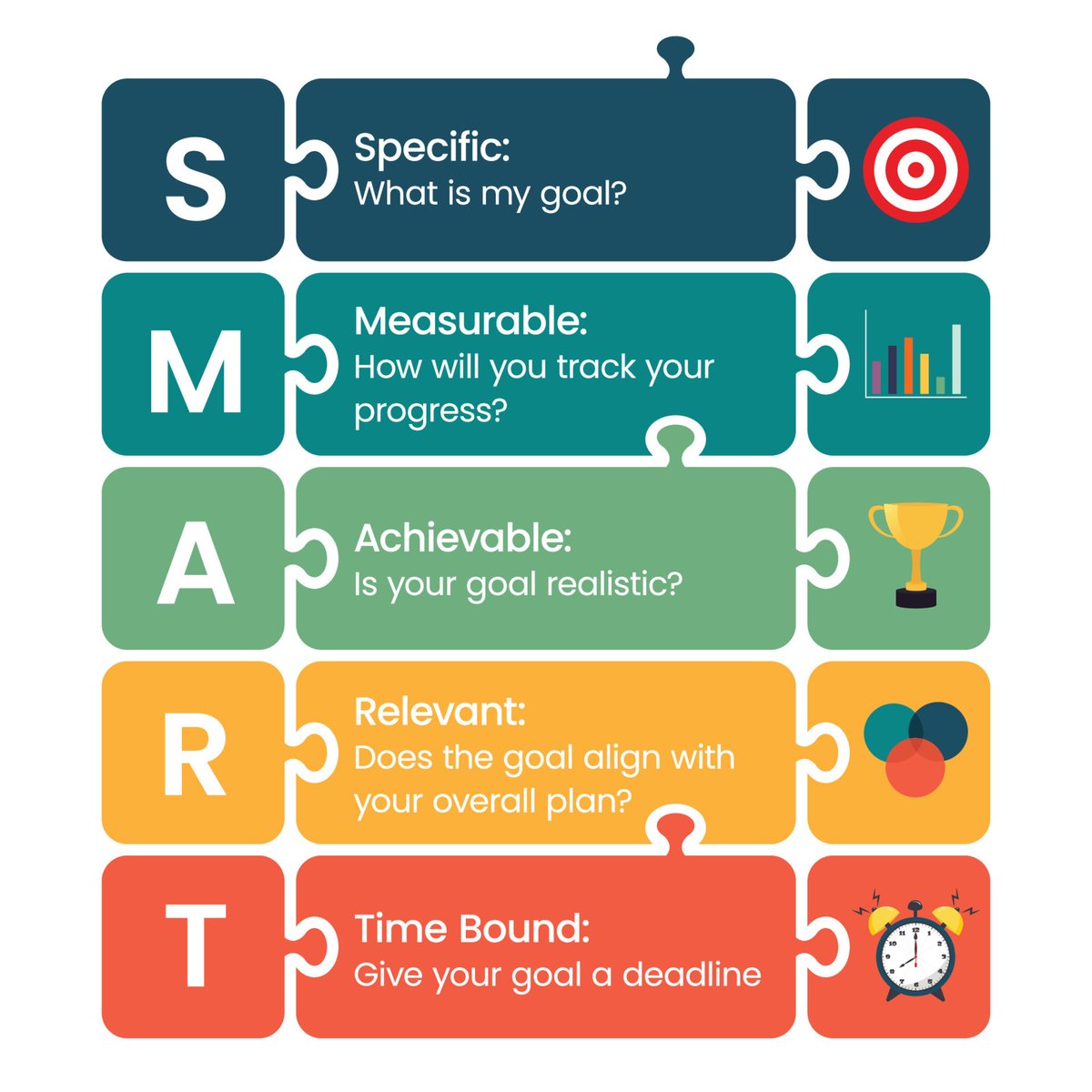
- SMART Goals: This framework emphasizes goals that are Specific, Measurable, Achievable, Relevant, and Time-bound. For example, "By the end of this semester, students will be able to write a five-paragraph persuasive essay with a clear thesis statement and supporting evidence" is a SMART goal.
- Bloom's Taxonomy: This hierarchical framework categorizes learning objectives into six levels: Remember, Understand, Apply, Analyze, Evaluate, and Create. It provides a useful structure for designing learning activities that progress from basic recall to higher-order thinking skills. Consider a biology class; At the 'Remember' level, students might define mitosis. At the 'Analyze' level, they might compare and contrast mitosis and meiosis.
- Fink's Taxonomy of Significant Learning: This framework focuses on creating learning experiences that lead to significant, lasting change in students. It includes six categories: Foundational Knowledge, Application, Integration, Human Dimension, Caring, and Learning How to Learn. For a medical school course, foundational knowledge would be the memorization of anatomical terms. Caring is the development of empathy towards patients. Learning how to learn includes the building of research skills for staying current in medical advancements.
Learning Goals in Action: Examples Across Disciplines
To further illustrate the application of learning goals, here are examples across various subject areas:
- Communication: Deliver a persuasive speech using clear and compelling language, supporting claims with credible evidence.
- Chemistry: Interpret Lewis structures to predict molecular geometry and polarity.
- Psychology: Apply cognitive behavioral therapy techniques to address common mental health challenges.
- Mathematics: Compute standard deviation and interpret its significance in statistical analysis.
- Computer Programming: Design a simple game using Pygame, incorporating user input and game logic.
- History: Write an essay comparing the causes of World War I and World War II, analyzing similarities and differences.
- Foreign Language: Conjugate verbs in the past tense and produce a short written narrative describing a past event.
- Marketing: Develop a comprehensive marketing plan for a new product launch, including market analysis, target audience identification, and promotional strategies.
- Nursing: Demonstrate proper techniques for measuring vital signs, including temperature, pulse, respiration, and blood pressure.
- Art: Present a portfolio of artwork demonstrating proficiency in shading techniques, creating depth and dimension in drawings.
Internship Goals: Bridging Theory and Practice
Internships provide valuable opportunities for students to apply their knowledge and skills in real-world settings. Learning goals for internships should focus on developing practical competencies and professional skills.
- Develop and implement marketing campaigns to promote a company's products or services.
- Apply software skills to analyze data and create reports.
- Conduct research to support decision-making.
- Assess portfolios of creative work.
- Manage events to promote brand awareness.
- Summarize case outcomes and identify key trends.
- Compose articles for the company's website or newsletter.
Presentation Objectives: Engaging and Informing Audiences
Presentations are a common form of assessment in many disciplines. Learning objectives for presentations should focus on developing effective communication skills and the ability to engage audiences.
- Inspire audience members to take action.
- Construct a well-organized and visually appealing presentation.
- Summarize key findings from research.
- Offer insightful analysis of complex issues.
- Communicate professional norms and expectations.
- Demonstrate how the product functions.
- Advocate for healthy habits to improve well-being.
- Instruct participants on how to use a new tool or technique.
- Deliver a compelling pitch to potential investors.
- Provide practical methods for solving common problems.
Kindergarten Fundamentals: Setting the Stage for Success
Even at the kindergarten level, learning objectives play a vital role in setting the stage for future academic success.
- Recognize letters of the alphabet.
- Count to 20.
- Identify community helpers (e.g., police officer, firefighter).
- Distinguish between plants and animals.
- Follow classroom rules and routines.
- Create a self-portrait using various art materials.
- Blend simple words (e.g., cat, dog).
- Read short paragraphs with assistance.
- Write their name.
- Sort objects based on color, shape, or size.
A Practical Playbook: Implementing Learning Goals Effectively
Here's a practical, action-oriented guide to implementing learning goals effectively:
- Start with the End in Mind: Begin by defining the desired outcomes. What should students be able to do, know, or feel by the end of the learning experience?
- Break Down Complex Goals: Divide large goals into smaller, more manageable objectives. This makes the learning process less daunting and allows students to track their progress more easily.
- Communicate Clearly: Clearly communicate the learning goals to students at the beginning of the course or lesson. Explain why these goals are important and how they will benefit them.
- Align Instruction and Assessment: Ensure that your teaching methods and assessment strategies are aligned with the learning goals. If you want students to be able to apply their knowledge, provide opportunities for them to do so in class and on assessments.
- Provide Feedback: Provide regular feedback to students on their progress toward the learning goals. Let them know what they are doing well and where they need to improve.
- Review and Revise: Review and revise your learning goals regularly based on feedback from students and changes in the field. Learning goals should be dynamic and responsive to the needs of learners.
Need more background? More on student learning goals.
Quick Answers: Addressing Common Questions and Misconceptions
- Q: Are learning goals and learning objectives the same thing?
- A: The terms are often used interchangeably. However, some educators distinguish between them, with goals being the broader, overarching aims and objectives being the specific, measurable steps toward achieving those goals.
- Q: How many learning goals should I have for a course?
- A: The number of learning goals will depend on the scope and duration of the course. However, it's generally best to focus on a few key goals rather than overwhelming students with too many objectives. Aim for quality over quantity.
- Q: How do I assess whether students have achieved the learning goals?
- A: Use a variety of assessment methods, such as exams, papers, presentations, projects, and class participation. Choose assessment methods that are aligned with the learning goals and provide meaningful feedback to students.
- Q: What if my learning goals are not measurable?
- A: While measurable goals are ideal, some learning goals may be more qualitative in nature (e.g., developing empathy). In these cases, focus on observable behaviors or indicators that suggest progress toward the goal. For example, you might assess empathy through students' responses to case studies or their interactions with peers.
Your Next Steps: Concrete Actions for Impact
Start by reviewing your existing syllabi or lesson plans. Identify the stated or implied learning goals. Are they clear, specific, and measurable? Use the frameworks and examples in this article to refine your goals and ensure they are aligned with your teaching methods and assessments. Communicate these updated goals clearly to your students and solicit their feedback. This iterative process will contribute to a more effective and engaging learning environment and help students unlock their full potential.