Here's the article:
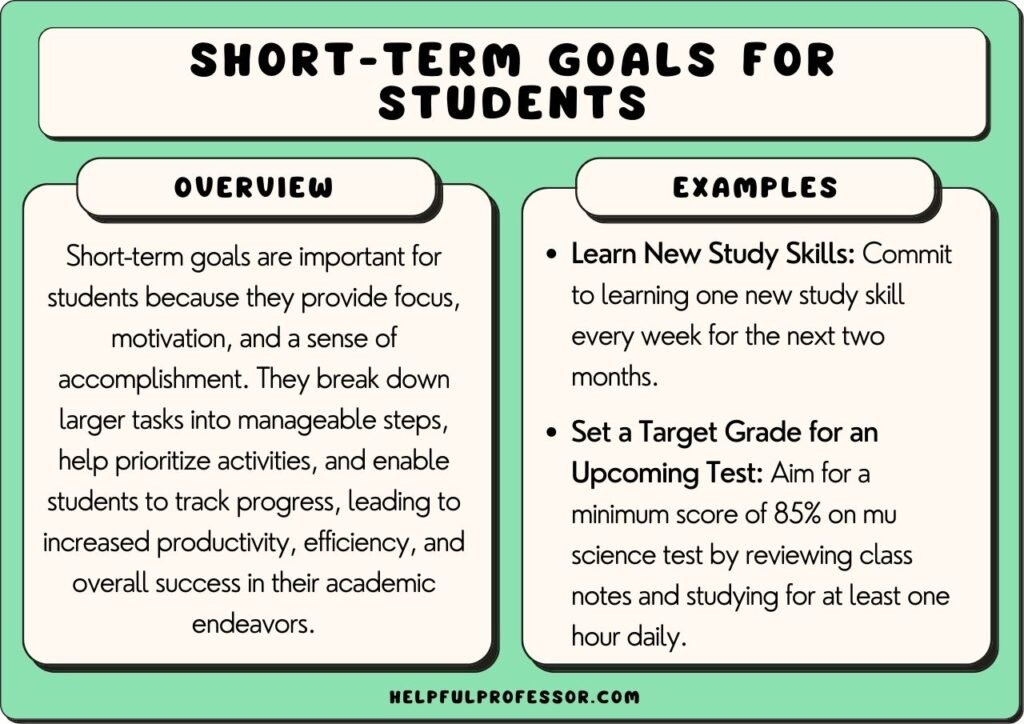
Feeling overwhelmed by the long road to graduation? Big dreams are great, but sometimes, breaking them down into manageable, achievable steps is the key. That's where short term goals examples for students come in – they’re your secret weapon for staying motivated and on track. Think of them as mini-missions that build up to ultimate success.
At a glance:
- Explore diverse examples of short-term academic, personal, and professional goals tailored for students.
- Learn how to apply the SMART framework to create effective and achievable goals.
- Discover practical tips for overcoming procrastination and staying motivated.
- Address common questions and misconceptions about short-term goal setting.
- Get a simple playbook to start setting and achieving your own goals today.
Why Short Term Goals Matter: The Stepping Stones to Success
Long-term goals can feel distant and daunting. Short-term goals, on the other hand, offer immediate gratification and a clear sense of progress. They are the individual bricks that build your foundation for future success. They keep you engaged, motivated, and provide opportunities for continuous improvement along the way. As explored in the broader guide, Set short term goals now
Academic Goals: Sharpen Your Focus and Improve Your Grades
Academic goals are directly related to your studies and can significantly impact your performance. Here are some examples to get you started:
- Enhance Note-taking Skills: Aim to improve your note-taking by trying a new method (e.g., Cornell Notes) this week. Measure your progress by comparing your understanding of the material before and after implementing the new technique.
- Finish Assignments in Advance: Set a goal to complete all assignments at least two days before the due date for the rest of the semester. This reduces stress and allows time for revisions.
- Improve Class Attendance: If you’ve been skipping classes, commit to attending all classes for the next two weeks. Track your attendance and note any improvements in understanding the subject matter.
- Actively Participate in Group Work: Resolve to contribute at least one insightful comment or question in each group work session this month.
- Set a Target Grade for an Upcoming Test: Determine a specific grade you want to achieve on your next exam and create a study plan to meet that target. For example, "I will get a B+ (80-85%) on the next history exam by studying for 2 hours each day in the week leading up to the exam."
- Attend Open Office Hours and Utilize Feedback: Commit to attending at least one office hour session per week to ask questions and seek clarification from your professors.
Practical Tip: Don't just set the goal; break it down into smaller, actionable steps. For example, if your goal is to "Improve Writing Skills," your steps might include: 1) Identify your weaknesses (grammar, structure, etc.), 2) Find resources for improvement (writing guides, tutoring), 3) Practice writing regularly, and 4) Seek feedback on your work.
Personal Goals: Cultivate Well-being and Growth
Personal goals are about improving your overall well-being and developing positive habits. They enhance your life outside of academics.
- Develop a New Good Habit Every Month: Focus on incorporating one positive habit into your routine each month. Examples include:
- Scheduled Sleep: Go to bed and wake up at the same time every day.
- Regular Physical Exercise: Dedicate 30 minutes to exercise three times a week.
- Mindfulness Practice: Spend 10 minutes each day meditating or practicing mindfulness.
- Find and Stop a Worst Habit: Identify a habit that negatively impacts your life (e.g., excessive social media use) and create a plan to break it. Track your progress and reward yourself for milestones achieved.
- Develop a Habit of Reflection: Spend 15 minutes each week reflecting on your experiences, lessons learned, and areas for improvement. Keep a journal to document your thoughts.
- Try a New Sport: Join an intramural sport or a recreational sports team to stay active and meet new people.
- Start Saving Money: Set a savings goal (e.g., save $50 per month) and automate your savings by setting up a recurring transfer to a savings account.
Case Snippet: Sarah, a student struggling with stress, set a short-term personal goal to practice yoga for 30 minutes three times a week. Within a month, she reported feeling less stressed and more focused on her studies.
Professional Goals: Prepare for Your Future Career
Professional goals help you develop skills and experiences that will benefit you in your future career.
- Create a Professional Profile: Update your LinkedIn profile and create a professional online presence. Include a professional headshot, a compelling summary, and details about your skills and experiences.
- Attend a Career Fair: Attend a career fair and network with recruiters from companies in your field of interest. Prepare a brief elevator pitch to introduce yourself.
- Practice Interviewing Skills at the Career Center: Schedule a mock interview at your college’s career center to get feedback on your interviewing skills.
- Talk to Teachers About Prospects/Career: Schedule meetings with professors in your major to discuss career paths and get advice on how to prepare for your future.
- Volunteer Your Time: Volunteer for a cause you care about to gain experience, develop new skills, and network with professionals in your field.
- Participate in an Internship or Job Shadowing Experience: Seek out internship or job shadowing opportunities to gain real-world experience and learn about different career paths.
Actionable Advice: Network intentionally. Don't just collect business cards; follow up with the people you meet. Send a thank-you note or connect with them on LinkedIn. Ask insightful questions and show genuine interest in their work.
The SMART Framework: Turning Goals into Reality
The SMART framework is a powerful tool for creating goals that are specific, measurable, achievable, relevant, and time-bound. Applying this framework ensures clarity and increases the likelihood of success.
Here’s how it works:
- Specific: What exactly do you want to achieve? Avoid vague goals.
- Measurable: How will you track your progress? Use quantifiable metrics.
- Achievable: Is the goal realistic given your resources and constraints?
- Relevant: Does the goal align with your broader objectives and values?
- Time-bound: When do you want to achieve the goal? Set a deadline.
Examples of SMART Goals: - "I will improve my grade in the next math exam from a C to a B (70-79%) by studying for 1 hour each day for the next two weeks and completing all practice problems." (Academic)
- "I will reduce my social media usage from 3 hours per day to 1 hour per day by using a website blocker and setting time limits on my apps for the next month." (Personal)
- "I will secure an internship in my field of study by attending the career fair, networking with recruiters, and submitting at least five internship applications by the end of the semester." (Professional)
Overcoming Challenges: Procrastination, Motivation, and More
Even with well-defined goals, you may encounter challenges along the way. Procrastination and lack of motivation are common pitfalls. Here’s how to overcome them:
- Break Down Large Tasks: Divide overwhelming tasks into smaller, more manageable steps.
- Use Time Management Techniques: Experiment with techniques like the Pomodoro Technique or time blocking to improve focus and productivity.
- Reward Yourself: Celebrate your progress and reward yourself for achieving milestones.
- Find an Accountability Partner: Partner with a friend or classmate to support each other and stay on track.
- Visualize Success: Imagine yourself achieving your goals and focus on the positive outcomes.
- Practice Self-Compassion: Be kind to yourself when you experience setbacks. Learn from your mistakes and keep moving forward.
Quick Answers: Common Questions About Short-Term Goals
- Q: How many short-term goals should I set at once?
- A: Start with 1-3 goals to avoid feeling overwhelmed. Once you’ve achieved those, you can add more.
- Q: What if I don’t achieve my short-term goal?
- A: Don’t be discouraged. Analyze what went wrong, adjust your plan, and try again.
- Q: How often should I review my short-term goals?
- A: Review your goals weekly to track your progress and make any necessary adjustments.
- Q: Can I change my short-term goals if my priorities change?
- A: Absolutely. Short-term goals should be flexible and adaptable to your evolving needs and circumstances.
- Q: Is it okay to have overlapping short term goals in different areas of my life, or should I focus on just one thing at a time?
- A: It's perfectly fine to have overlapping goals across different areas, as long as you can realistically manage them all without burning out. Prioritize based on what's most important to you and ensure they complement each other. For example, a goal to improve time management can positively impact both academic and professional goals.
Your Actionable Playbook: Start Today
Ready to start setting and achieving your own short-term goals? Here’s a simple playbook:
- Identify Your Priorities: Determine what areas of your life you want to improve (academic, personal, professional).
- Brainstorm Goals: Generate a list of potential short-term goals in each area.
- Apply the SMART Framework: Refine your goals using the SMART criteria to ensure they are specific, measurable, achievable, relevant, and time-bound.
- Create an Action Plan: Break down each goal into smaller, actionable steps.
- Track Your Progress: Monitor your progress regularly and make adjustments as needed.
- Celebrate Success: Acknowledge and reward yourself for achieving milestones.
Setting short term goals examples for students doesn't have to be complicated, and it is not a one-size-fits-all approach. Find what works best for you and refine it as needed. By breaking down your long-term aspirations into manageable steps, you can create a roadmap for success and enjoy the journey along the way.